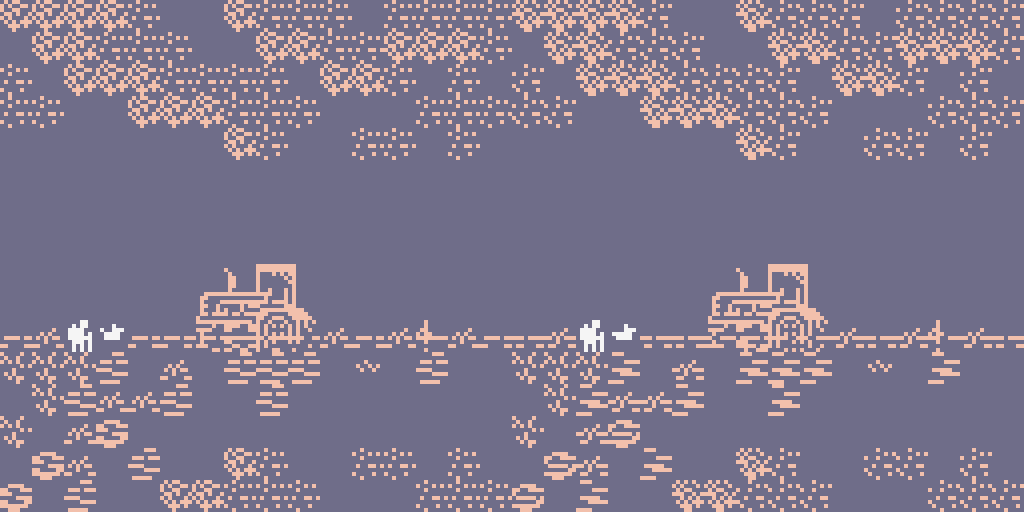
Two weeks ago, I reached an important milestone with Scavenger Suite: after about a year of work, I put the finishing touches on all major scenes of the game. The current build has almost 200 rooms and over 400 tiles! [I added another hundred or so tiles and more rooms since beginning this post, but I'm not going to bother to count them all again.] I’ve gotten to see my art evolve over time, as well as my confidence using Bitsy’s built-in capabilities to stretch the gameplay. I feel like I’m closing in on the finish line, and am very much in the refinement stage.
done (basically):
- story
- scenes
- gameplay
in progress:
- music
- end titles
- pacing & consistency
- testing & more testing
- game page
- achievements
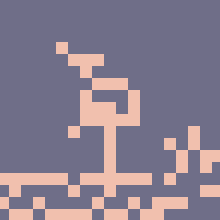
Achievement clues will be small icons like this.
Achievements are something I’m very excited about. I should say “achievements” in quotes because they’re really more like easter eggs, you don’t receive a notification for unlocking them (though this is something I’d like to try in a different game, tattoo parlor maybe. I think it would simply interrupt the mood of SS). In the process of building the second major section of the game—–what I have been calling “day 2”—–I included some small moments and scenes that the player can discover by revisiting areas at certain times. Based on where you go and when, you can get a slightly different experience with each playthrough. I intend to list clues for “achievements” on the game page so you can be on the lookout for them in-game. It's a glorified seek-and-find, really.
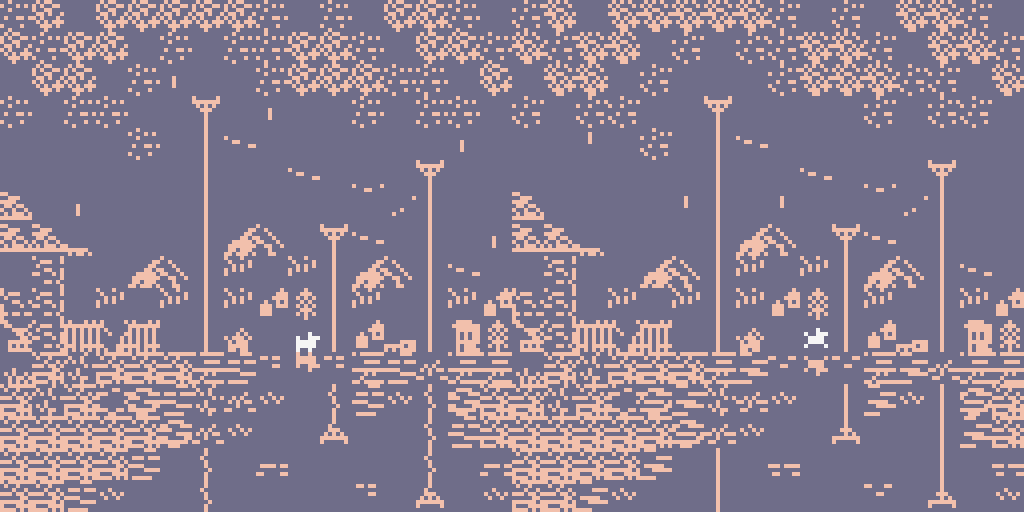
Music is well underway. The soundtrack is all instrumental pieces that I recorded 10-15 years ago. When I was considering composing new music for the game, I put together a playlist with some of my old work that I liked, and the songs kind of just stuck. I made a lot of instrumental/electronic/soundtracky stuff in my early 20s and never did anything much with it. It’s nice to give these songs a second life after so many years.
I’m using David Mowatt’s Bitsy Muse hack and Candle’s Bitsy Muse UI to cue the music in specific areas in the game. So far it is working really well. To test the music, I set everything up in the UI how I think I want it to go, then play through the game while trying to approximate the amount of time a player will spend in each area. I’ve had to cut some of the songs down into shorter fragments to get the timing right. The full versions of the songs will be available on my Bandcamp after the game releases.
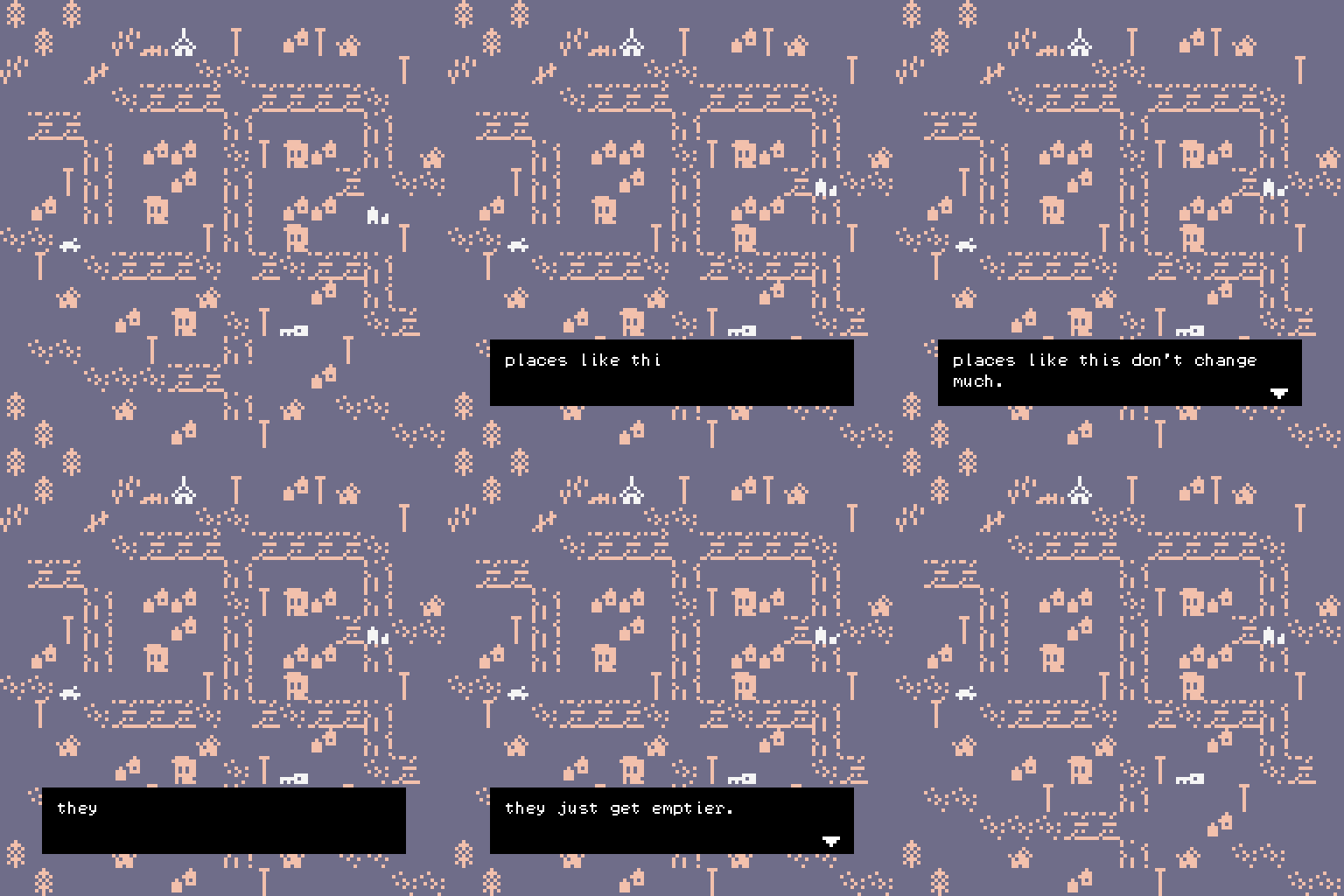
some other things I learned in day 2:
My go-to for triggering dialog used to be placing an invisible item in the room that the player character would activate by walking over and “picking up.” I still use this for certain things; it’s a quick and easy way to trigger dialog only once in a room. But somewhere in day 2, I learned that there are so many more ways to trigger dialog using locked exits. It helps to think of exit locks as an interruption or expansion of the exit dialog, rather than just a literal locked door that requires a key to open. You don’t even need to use keys, you don’t even have to unlock the exit for it to still function as an exit. I.e., you might have an exit dialog that looks like:
- property locked = true
- (character says a line of dialog)
- exit to room 2 at (15,10)
- change avatar to look like (dog facing left)
- (character says another line of dialog)
The exit still takes you to a different room, but locking the exit + inputting an exit in the dialog gives you the ability to add any number of actions that happen after the player exits the first room. This is great for some of the more cinematic areas, where I want to move the player through a sequence of rooms/dialog/avatar changes that have the appearance of an animation.
You can also use locked exits + dialog to trigger avatar changes within the same room, which is useful for rooms where I want the player character to turn around if they get to a wall.
The combination of locked exit + dialog helped simplify my process immensely. I think it also declutters the game, as I don’t have to make as many duplicate rooms or multiple invisible items. (I still use a lot of duplicate rooms, mostly for those “animated” scenes.) I’m sure the game could use a lot more decluttering if I really wanted to be a nerd about it, but as the whole thing is under 600 KB I’m not terribly concerned.
I am trying not to rush the end stages of making Scavenger Suite. Part of that is because I want it to be the best it can be, but I think the larger part is that I will miss working on it. I’m not sure what my next game project will be—–I have some ideas, but I don’t feel strongly compelled in a clear direction. I want to make a real attempt to learn Godot or another game engine (my failure to learn DragonRuby haunts me), and maybe make some proper things in Blender, but it all feels pretty daunting. Maybe I will investigate Yarn Spinner, Twine, or visual novel tools. I also like the idea of using the Bitsy version of Scavenger Suite as a prototype for something larger. Who knows, maybe I can turn it into a low-poly 2D/3D hybrid sidescrolling thing someday.
In the meantime, here's the game trailer:
Follow big-field.itch.io to be notified when the game is released.
Read the first devlog and play the demo here.